
Hej!
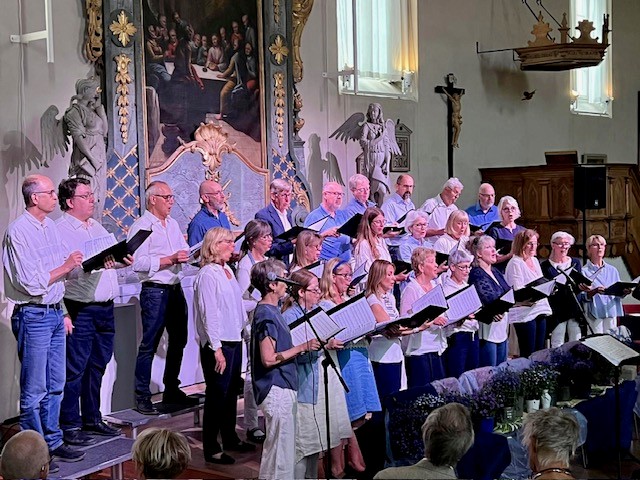
Stockholms Motettkör KFUM är en blandad kör med 25-30 sångare som sjunger allt från klassiska verk och svensk körlyrik till jazz och folkmusik. Är du van körsångare med god notläsningsförmåga, ta chansen att utvecklas med oss och vår nye dirigent Szymon Rudzki, antingen som fast medlem eller i ett projekt. Vi repeterar onsdagskvällar i city.
Intresserad? Mejla provsjunga@stockholmsmotettkor.com
Varma hälsningar
Sanna
/Susanna Sjögren Tengwall
Ordförande i
Stockholms Motettkör KFUM
 KMS - Kungl. Musikhögskolans Studentkår
kristna gillar ER – Kraljevina Hrvatska
2 tim ·
Kažu domaći boljševici, sekularci i jugoslaveni da nas Hrvata koji vjerujemo u Boga više nema!? Kažu da smo se raselili, da su nam crkve prazne, da nas više nema i da će nas zamijeniti nekim drugima. Hrvati pokažimo im u komentarima da smo i dalje ovdje da smo i dalje Za Boga, kralja i dom! Da vjerujemo u Krista kralja nad kraljevima, u svoju domovinu i presjajnu krunu hrvatsku za vijeke vjekova!
Jeste li znali da su kroz povijest zastave na svom grbu imale uvijek katolički križ koji je simbol Kristove vladavine i naše katoličke vjere? 👑🇭🇷 Grb svih hrvatskih zemalja, grb krune hrvatske i naroda Hrvata koji prikazuje četiri hrvatske krunovine Hrvatsku, Dalmaciju, Slavoniju i Bosnu-Hercegovinu
(ukoliko vas zanima više informacija o zastavi ili ju želite naručiti pošaljite nam ih u naš inboks)
#KraljevinaHrvatska
EWTN
1 tim
·
What is the Transfiguration?
The Transfiguration of Jesus is one of the key events in Jesus’ life. He took three apostles – Peter, James, and John – up to a high mountain to pray. As they were praying, His appearance changed, and His clothes became “dazzling white.” At that point, Moses and Elijah appeared and spoke to the Lord about His upcoming death. A cloud overshadowed the group, and God the Father’s voice came from the cloud saying, “This is my Son, my Chosen; listen to him!”
FMI: https://bit.ly/EWTN_Transfiguration
The Transfiguration – Light from Light
16h sedan
Salvation
Latest
Transfiguration
Contemplation
Light from Light
1+
Matt 17:1-8
This week, amidst our ‘Ordinary Time’ we are given this extraordinary feast of light – the Transfiguration. Normally it falls on a weekday, and we don’t pay too much attention to it, to our own loss in the Western Church. In the East, though, this is one of their twelve great feasts. It is so because it is a feast of our salvation. And this experience that the disciples have is meant to be a foundational experience of prayer, for the whole Church.
In Matthew’s gospel, Jesus is always climbing mountains. Among the most significant of them, at the beginning of his ministry, Jesus will reveal the New Law of love on the Mount of Beatitudes; at the end of his life, he will pour out his Blood for this Love on the mount of Calvary. Between these two, Jesus climbs the mount of the Transfiguration. For a Jewish reader, this would have immediately recalled the image of Moses. Moses was the most important figure in Jewish history. It was to Moses that God first revealed his Name in the burning bush, Moses who brought them out of Egypt by revealing to the people the God who had called them. And as they come out, Moses goes up a mountain, Sinai, to receive the Law from God. And it was on this mountain that Moses frequently conversed with God. This is the God that the Bible says, lives in ‘unapproachable light’ (1 Tim 6:16). When God descended on Mt. Sinai in his glory, the people were so terrified that they asked him to speak only to Moses and let Moses speak to them. Only Moses could stand in God’s presence and speak to God as a friend. In that encounter, even his face was changed. His skin was so radiant with light that people were unable to gaze upon him. Moses was the revealer and the lawgiver. To listen to God was to listen to Moses. Especially the time when the Temple was destroyed, the Jews understood the Torah, the first five books ascribed to Moses as containing the glory, the wisdom of God. It was the Torah to which the Jews looked to for instruction. And they lived by the promise given at Moses’ death: God would raise up another prophet like Moses for the people, to whom they should listen (Deut 18:15-22). And just as they had been set free from Egypt by Moses, a new Moses could set them free once again – as they were enslaved by Rome.
As Jesus takes up the three disciples up the mountain, Jesus has just asked all of them who they think he is. The disciples, know Jesus is someone extraordinary, but they can only think of the prophets at the most. Only Peter proclaims Jesus as Son of God – but this was a title of the Messiah – Peter would not have known Jesus was God’s own Son. But on this mountain, Jesus is suddenly transfigured, his face shining like the sun. Moses’ face reflected God’s glory, but Jesus was God from God, light from light. The one they thought was just a prophet, now turns out to be greater than Moses himself. As if to confirm the point, Moses and Elijah turn up, speaking to Jesus, showing that he is greater than themselves. It is Moses who gave the Jews their history, their identity – but Elijah the great prophet was meant to come before the last day when God would restore all things. Between Moses, their past and Elijah their future, stands Jesus, the one in whom all things come together. It is in him that all of their lives, both their past and the future makes sense and receives their meaning. As the see him, the disciples are flooded with his light. This light is his love – it is the uncreated divine light, the light before which no one can stand, which was always in Jesus. This light is the love between the Father and the Son, the Spirit now pouring into the disciples. Icons of the transfiguration capture the apostles in different states: John, knocked back unconscious by the force of this love flooding him as light; James, his head covered, trembling and Peter, desperately trying to say something, even as the Father’s voice cuts him off.
As Peter blabbers, trying to respond to what is happening, the Father’s voice cuts him off: ‘This is my son, the beloved…listen to Him!’ Jesus was now the Torah in person. But the one whom the Father points to, is not saying anything, he is simply radiating the glory of the Father’s Love. The reception of this light is more primal than language. To simply receive it is the experience of prayer, of contemplation. It comes as pure gift; we cannot earn it. Peter’s blabbering is still instructive. He says, ‘it is good we are here’. It is an experience of the pure goodness of God, but language cannot capture this in any way. It is how a child knows, even before being able to speak that it is loved by its mother. And this knowledge changes the child. This is the light which shines in the darkness, which the darkness cannot overcome. It is the light which enlightens everyone. In this light, we are set free from our enslavements, we know who we are, we are transformed as children of the light. Now, it is Jesus himself who leads and speaks to us, much like the Torah. In the Old Testament, only Moses and perhaps Elijah could boast of such a close encounter with God. Everyone else’s access to God was through the Temple and the Torah only. But now, this was being opened to Peter, James and John, the first pillars of the Church. And in them, it has been opened to all of us. This is why it is so significant. Peter, James and John are not simply another elite group, away from the rest of us: they are the Church, and in them we have been brought to stand where only Moses stood. Our destiny is to shine, just like Moses did – ‘the righteous will shine like the sun’ is the promise for those baptised.
But where do you and I experience this? Well, this is an event of prayer. But we supremely encounter this in the Eucharist. If you notice, it is Jesus who takes them up the mountain: it is almost as if Jesus was carrying them. We cannot stand in God’s light, but it is Jesus who takes us there. St Teresa keeps talking of ‘keeping the good Jesus’ near us in our prayer. At the end of their terrifying but awesome experience, Jesus comes and touches them. They see no one but him, the same one they have been with all this while. It is in this same way that Jesus comes to us, touching us gently, in the Eucharist. This light pours into us each time we receive the Eucharist in a manner beyond words. We simply have to receive it.
In this encounter, all our past and our future can be brought together, giving our life meaning. Here this light can set us free from all the darkness that terrifies us. At some points, Jesus might lift the veil for us to see something of his glory, but always, he still pours his love into us in prayer. Those who walk in this, will radiate this light even in this life, and shine with his light forever in the life to come.
GillaGilla
i attended a concert by a norwegan choir, and they sang some leornard cohen..
GillaGilla